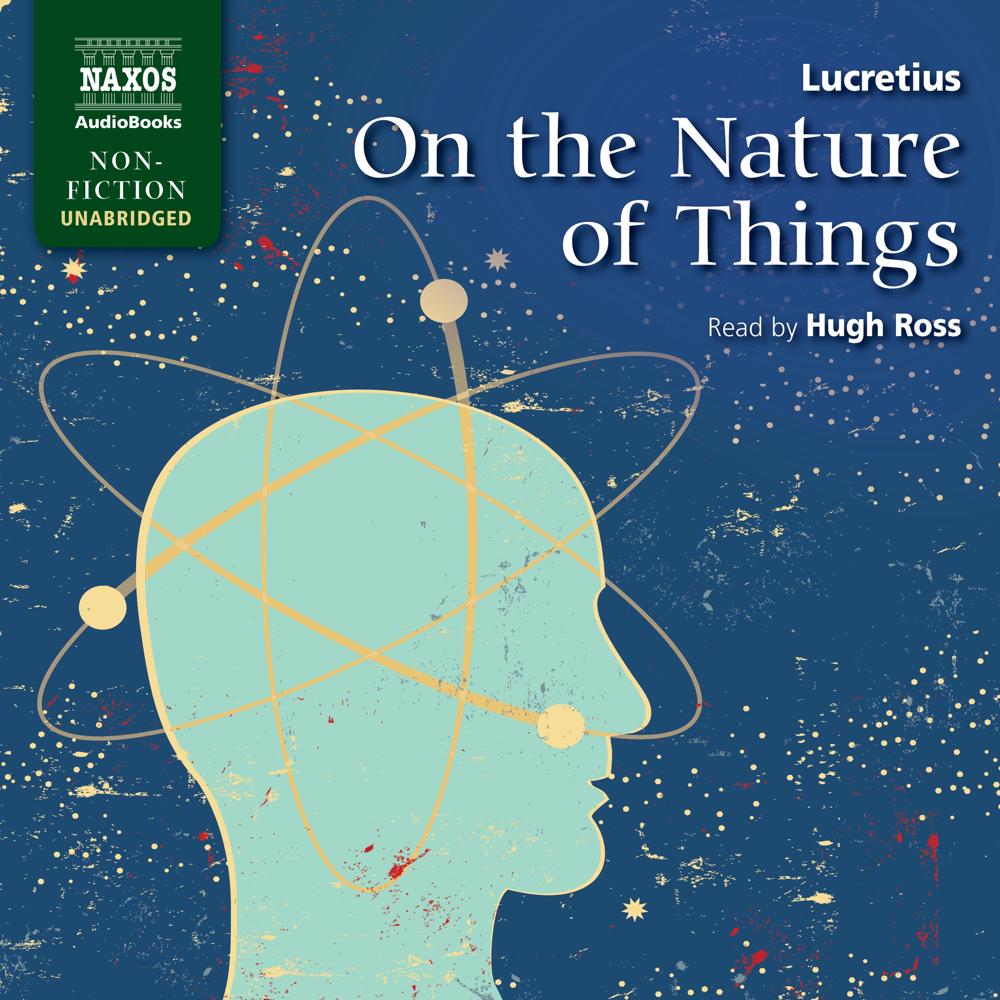
On the Nature of Things
- Author Lucretius
- Narrator Hugh Ross
- Publisher Naxos AudioBooks
- Run Time 8 hours and 43 minutes
- Format Audio
- Genre Philosophy.
Click to open directly in the xigxag app.
Flexible Pricing & Rewards For Listening
At xigxag, the more you read, the less you pay* on select audiobook and x-book® titles, as in the table below. Pricing updates automatically in the app and resets one year after your first purchase. And you can always find a selection of brilliant titles available for only $7.95.
*Only the full price titles you buy count toward your personal pricing tier. Full price titles don’t include Listen for Less or other books bought with a voucher or discount code.
Titles Purchased
- 1-5
- 6-10
- 11-15
- 16-20
- Over 20
Price p/Title
- $13.95
- $12.95
- $11.95
- $10.95
- $9.95
Listen to a sample
What to expect
Critics Review
The Roman Lucretius was a follower of Epicurus, who taught that knowledge, fraternity, and the practice of virtue lead to the greatest pleasures in life – tranquility and security. Lucretius set forth his interpretation of this philosophy in his only known writing, De Rerum Natura, or On the Nature of Things. It seems modern in its materialism, disdain of superstition, and trust in science, but remote in its phrasing and versification – for it is not only a treatise but a poem. Narrator Hugh Ross goes to great lengths to bring his considerable expressive power to bear on the meaning of the lines but falls short on the poetry. The graceless translation by Canadian scholar Ian Johnston does not help.
In this first-century BCE epic poem, Roman poet/philosopher Lucretius explores the doctrines of Epicurean philosophy, systematically teaching how the universe is not the creation of a supreme being but can instead be explained by natural laws. He also anticipates several modern ideas, as in his theory of atomism, a belief in the existence of atoms that produce the materials we see around us. Ian Johnston, who produced a new verse translation for this recording, captures the poetic force of the original without sacrificing clarity, while narrator Hugh Ross (Aristotle: An Introduction) delivers a clear and lively performance. Though some listeners may have difficulty with the scientific explanations, this audio offers a poetic and persuasive rendition of a philosophical classic and is recommended for academic and large public libraries.
About xigxag
Experience the best audiobooks with xigxag, an innovative and user-friendly audiobook platform designed for seamless discovery, purchase, and enjoyment of your favorite titles. Our flexible pricing model offers bestselling audiobooks for less, providing affordable prices and the best audiobook deals without requiring a subscription. Perfect for gifting, xigxag also features convenient audiobook gift cards and in-app audiobook gifting options.
Beyond the listening experience, xigxag stands as an exciting alternative to big tech, embodying a strong commitment to sustainability and ethical practices. As the only B Corp certified UK audiobook service, we ensure a guilt-free listening experience from a leader in audiobook innovation.
Effortlessly search audiobooks, access honest audiobook reviews that evaluate both the content and narration, and easily discover hidden gems. Whether you prefer to download or stream top audiobook titles, xigxag provides the best possible listening experience anytime, anywhere, on the UK’s best independent audiobook app. Discover the future of audiobooks today.